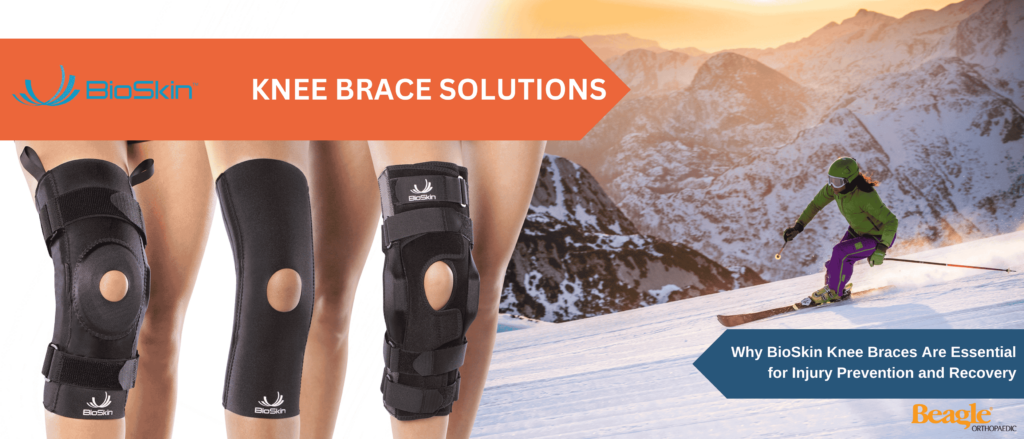
How to Protect Your Knees While Skiing: Injury Prevention and Recovery
Skiing is an exhilarating, high-impact sport, but it comes with its risks – especially for your knees. The intense twisting, sudden stops, and high speeds involved place significant stress on your knee joints, making injuries a common concern for skiers of all skill levels.
Understanding common knee injuries and the benefits of using a quality knee brace, like those from BioSkin, can help you stay safe on the slopes. A reliable knee brace not only offers protection but also helps manage existing issues, providing the stability and support needed to enjoy your time on the slopes with confidence.
The adrenaline rush of skiing and snowboarding comes with inherent risks. Accidents can happen quickly, and injuries are unfortunately a frequent occurrence. Ski slopes can be hazardous for several reasons:
Rapidly Changing Conditions: Weather and snow conditions can shift unexpectedly.
Variable Terrain: Slopes differ in difficulty, inclines, and layout.
Poor Technique or Preparation: Inadequate skill levels or improper training can lead to accidents.
Equipment Issues: Using the wrong or poorly maintained gear increases the likelihood of injury.
Crowded or Icy Slopes: High traffic, bumpy terrain, and icy patches pose additional challenges.
By addressing these risks and incorporating protective measures – like a knee brace – you can minimise the chance of injury and make the most of your skiing adventures.
Common Skiing Knee Injuries
Have you ever twisted your knee while skiing? You’re not alone. Each year, over half a million people suffer ski-related injuries, with knee injuries being the most common – accounting for 30-40% of all cases. Prompt recognition and treatment of these injuries are crucial for speeding up recovery and improving your chances of returning to the slopes before the season ends.
Here’s an overview of the most common skiing knee injuries:
Anterior Cruciate Ligament (ACL) Tear: The ACL is a key stabiliser in the knee, and it’s particularly vulnerable during skiing due to twisting motions or hyperextension. ACL tears are often severe and may require surgical intervention and a lengthy rehabilitation period. Symptoms include a loud pop, swelling, and instability in the knee.
Medial Collateral Ligament (MCL) Tear: The MCL provides stability to the inner side of the knee and is frequently injured during abrupt turns or falls that cause the knee to bend inward (valgus stress). MCL tears can range from mild to severe, with many cases healing through rest, bracing, and physical therapy rather than surgery.
Meniscus Tear: The meniscus is a shock-absorbing cartilage between the femur and tibia. Twisting motions, particularly when the knee is bent, are common causes of meniscus tears. Symptoms include pain, swelling, and a locking sensation in the knee. Treatment varies from rest and rehabilitation to surgical repair, depending on the extent of the damage.
Patellar Tendonitis (“Jumper’s Knee”): This overuse injury results from repetitive stress on the patellar tendon, which connects the kneecap to the shinbone. Skiers may experience pain and inflammation in the front of the knee, particularly during jumps or abrupt movements. Early intervention with rest, stretching, and strengthening exercises can prevent the condition from worsening.
Knee Dislocation: While rare, knee dislocations can occur during high-impact falls, often involving multiple torn ligaments. This injury is serious and typically requires immediate medical attention, surgery, and long-term rehabilitation. Symptoms include extreme pain, deformity, and an inability to move the knee.
Preventing Knee Injuries: Investing in a high-quality knee brace, such as those from BioSkin, can help stabilise and protect your knees while skiing. Combined with proper technique, adequate preparation, and maintaining strong leg muscles, you can significantly reduce the risk of injury and enjoy the slopes safely.
Why Knee Braces Are Essential for Skiers
Knee braces are not just for recovering from injuries – they are a practical way to protect your knees and reduce the risk of injury while skiing. The forward motion and intense pressure on your knees during downhill skiing significantly increase the likelihood of your knee joint giving out, which can lead to serious accidents.
Several factors can place certain skiers at a higher risk of knee injuries, including:
Weight and Height: Increased body weight or longer limbs add extra stress to the knees.
Age: Older skiers may have less joint stability or pre-existing conditions.
Medical History: Previous knee injuries or chronic conditions like arthritis increase vulnerability.
Slope Difficulty: Steeper or more challenging terrains put additional strain on the knees.
Technique and Preparation: Poor form, inadequate training, or improper equipment can raise injury risks.
The Benefits of Wearing a Knee Brace While Skiing
Knee braces are not just for recovering from injuries – they are a practical way to protect your knees and reduce the risk of injury while skiing. The forward motion and intense pressure on your knees during downhill skiing significantly increase the likelihood of your knee joint giving out, which can lead to serious accidents.
A high-quality knee brace, such as those from BioSkin, can provide essential support and protection for skiers. Here’s how a knee brace can help:
Prevent Knee Injuries: Stabilises the knee joint and reduces the chances of strain, sprains, or ligament tears and impacts while skiing.
Enhance Stability: Offers added support to keep your knee secure during movement.
Reduce Strain: Minimises excessive pressure on your knee and surrounding joints.
Reduced Stress: Minimises the load on the knee joint, especially during high-impact activities like jumps or sharp turns
Pain Relief: Helps alleviate discomfort from existing injuries or overuse during long days on the slopes.
In addition, a knee brace can:
Prevent Injury Aggravation: Shields existing injuries from worsening under the demands of skiing.
Boost Confidence: Provides reassurance, allowing you to ski allowing you to ski more confidently without fear of aggravating an existing injury and focus on performance rather than potential risks.
Whether you’re a seasoned skier or a beginner, incorporating a knee brace into your gear can be a game-changer. It’s a simple yet effective way to stay safe, manage discomfort, and make the most of your time on the slopes.
Invest in your knee health today and enjoy skiing with peace of mind.
In today’s fast-evolving healthcare landscape, the demand for quality, safety, and accountability in medical device manufacturing has never been higher. At Beagle Orthopaedic, we believe that...
At Beagle Orthopaedics, we believe that every small change can make a big difference when it comes to protecting our planet. Sustainability isn’t just a buzzword...